 English
 中文简体
中文简体 Español
Choosing the right home appliance display glass requires matching five core parameters to the specific appliance and operating environment: glass type and thermal resistance, thickness and tempered safety specification, optical surface treatment for touch and visibility, dimensional and shape accuracy, and coating compatibility with the appliance's display technology. Display glass in home appliances — oven doors, microwave front panels, refrigerator display windows, washing machine portholes, cooktop surfaces, and control panel covers — must simultaneously transmit visual information clearly, withstand thermal and mechanical stress in service, and integrate with touch sensor, LED, or LCD display layers. Selecting glass that underspecifies any of these parameters results in cracking, delamination, fogging, or display legibility failures that are expensive to rectify after production. The correct starting point is always the appliance's operating temperature range and whether the glass is a structural, thermal, or display-only component.
Content
- 1 Determine the Required Thermal Resistance First
- 2 Select the Correct Thickness and Tempering Specification
- 3 Choose the Surface Treatment for Touch, Visibility, and Glare Performance
- 4 Verify Touch Sensor Compatibility
- 5 Appliance-Specific Glass Selection Summary
- 6 Dimensional Accuracy and Edge Quality Requirements
Determine the Required Thermal Resistance First
Thermal performance is the non-negotiable starting point for appliance display glass selection because it determines which glass type can be used at all. Specifying glass with insufficient thermal resistance in a high-temperature application is a safety failure, not simply a performance issue.
- Standard tempered soda-lime glass — maximum continuous service temperature of 250–300°C. Suitable for microwave display panels (microwave cavity temperature typically stays below 120°C at the glass surface), refrigerator display windows, washing machine porthole outer panels, and room-temperature control panel covers. Not suitable for oven door inner panels or cooktop surfaces.
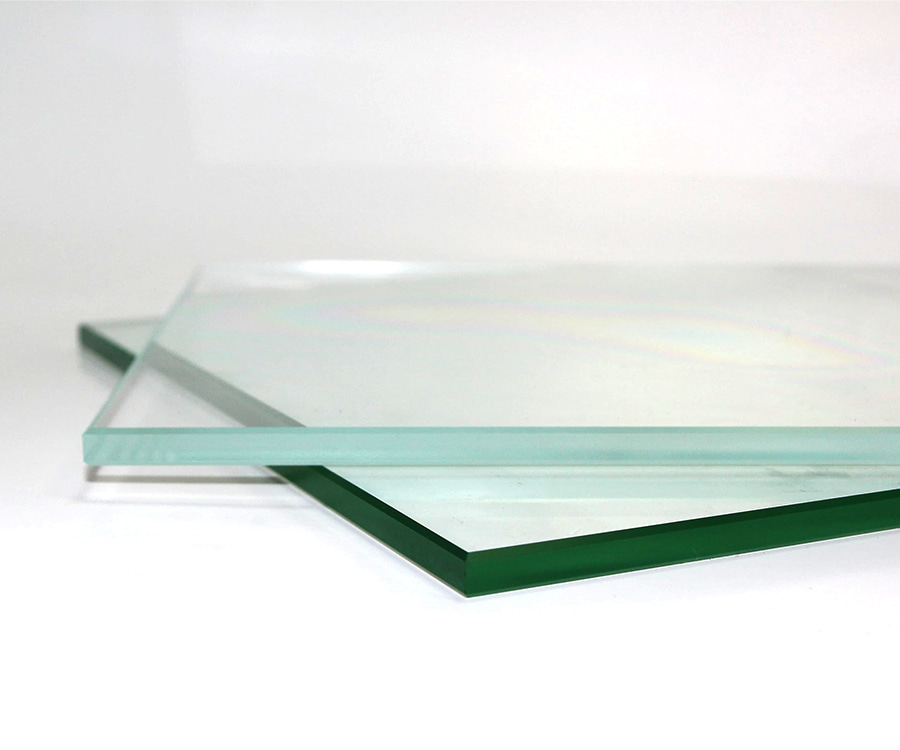
- Borosilicate glass — maximum continuous service temperature of 450–500°C with a thermal expansion coefficient of 3.3 × 10⁻⁶/°C (approximately one-third that of soda-lime glass). Borosilicate's low thermal expansion gives it exceptional resistance to thermal shock — the ability to withstand rapid temperature changes of 100–200°C without cracking. It is the correct choice for oven door inner panels, steam oven viewing windows, and any display glass that will be exposed to direct radiant heat from a heating element.
- Ceramic glass (glass-ceramic) — near-zero thermal expansion coefficient (0 ± 0.5 × 10⁻⁶/°C), maximum service temperature of 700–750°C, and resistance to thermal shock from room temperature to full operating temperature in seconds. Ceramic glass is the mandatory specification for induction and radiant cooktop surfaces — no other glass type can withstand the repeated thermal cycling from cold to 600°C+ surface temperature that a cooktop experiences in daily use.
A practical rule: measure or calculate the maximum glass surface temperature during normal appliance operation, add a 25% safety margin, and select glass whose rated maximum service temperature exceeds this figure. For oven door outer panels (typically 40–60°C surface temperature), tempered soda-lime glass is adequate. For oven door inner panels (200–400°C surface temperature depending on oven type and insulation), borosilicate is required.
Select the Correct Thickness and Tempering Specification
Glass thickness and tempering level together determine the panel's mechanical strength, its resistance to impact and pressure, and the fragmentation behavior in the event of breakage — a critical safety parameter for appliances used in domestic environments.
Thickness Selection by Application
- Control panel cover glass / display overlay — 2–4 mm tempered or chemically strengthened glass. At these thicknesses, the glass provides adequate scratch resistance and touch sensor transmission while remaining thin enough for integration with touchscreen modules and LED display stacks.
- Microwave and oven door outer panel — 4–6 mm tempered glass. The outer door panel must resist accidental impact (door slamming, dropped items) and thermal cycling from the appliance's operating heat. At 4–6 mm, fully tempered glass provides the impact resistance and safe fragmentation behavior required by IEC 60335 appliance safety standards.
- Oven door inner panel — 4–6 mm borosilicate. Inner oven panels are exposed to direct oven heat and must be specified in heat-resistant glass at adequate thickness to maintain structural integrity over the oven's service life of typically 10–15 years of regular use.
- Induction cooktop surface — 4 mm ceramic glass is the industry standard. This thickness balances thermal resistance, induction coil coupling efficiency (thicker glass slightly reduces coupling), mechanical strength under cookware loading, and resistance to thermal shock from cold water spills on a hot surface.
- Washing machine porthole — 5–8 mm tempered glass. The porthole must withstand the drum pressure differential and mechanical vibration of the spin cycle, plus the repeated impact of the wet load against the glass during operation.
Tempering and Strengthening Methods
- Thermal tempering — the glass is heated to approximately 620–650°C then rapidly quenched with air jets, creating compressive stress in the surface layer (80–150 MPa) that increases flexural strength to 3–5× that of annealed glass and causes the glass to shatter into small, blunt fragments rather than sharp shards when broken. Thermally tempered glass cannot be cut or drilled after tempering — all holes, notches, and edge profiles must be completed before the tempering process.
- Chemical strengthening (ion exchange) — the glass is immersed in a potassium salt bath at approximately 400–450°C, exchanging smaller sodium ions for larger potassium ions in the surface layer and creating very high surface compressive stress (500–900 MPa). Chemically strengthened glass achieves much higher surface hardness and scratch resistance than thermally tempered glass and can be produced in thinner panels (0.5–3 mm). It is the standard process for thin control panel covers and touchscreen overlay glass where deep compressive strength and scratch resistance are required in a thin-section component.
Choose the Surface Treatment for Touch, Visibility, and Glare Performance
The optical surface treatment of the display glass is the parameter most visible to the end consumer and most directly affects the appliance's perceived quality and display legibility in real-world lighting conditions.
Anti-Reflection (AR) Coating
Uncoated glass reflects approximately 4% of incident light per surface — meaning a flat glass panel reflects around 8% of light from both surfaces, reducing contrast of the underlying display and creating distracting reflections of overhead lights and windows. Anti-reflection coatings reduce surface reflectance to 0.1–0.5% per surface, dramatically improving display contrast and visibility. For appliances with LCD or LED display panels behind the glass, AR coating is strongly recommended to achieve acceptable display legibility in brightly lit kitchen environments.
Anti-Glare (AG) Etching or Coating
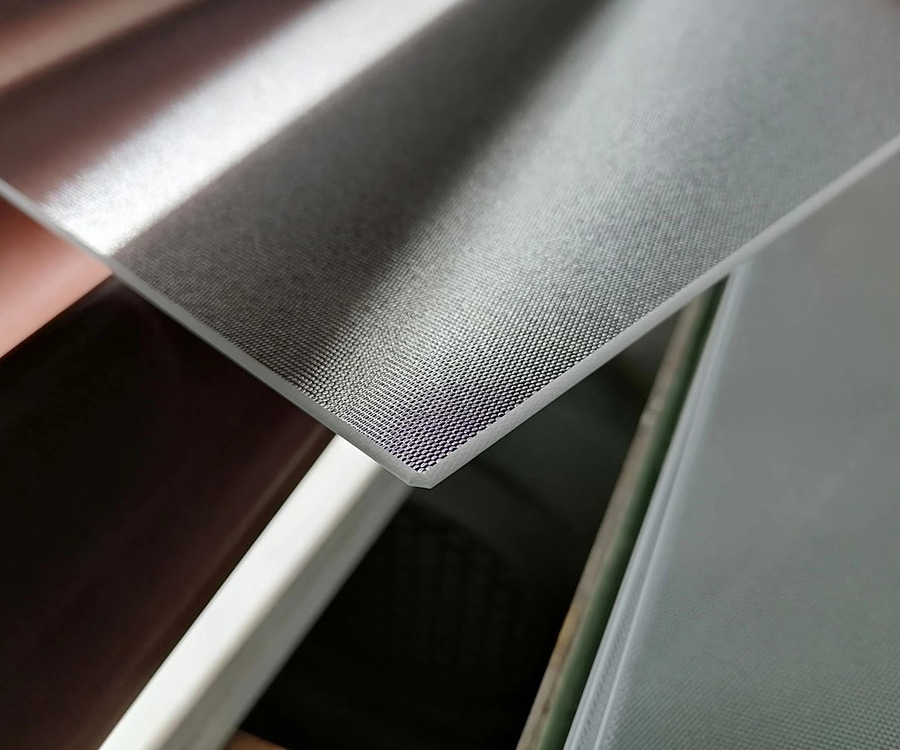
Anti-glare treatment creates a micro-textured surface that scatters reflected light rather than reflecting it specularly, reducing the visibility of bright spot reflections from windows and ceiling lights. AG treatment is preferred for appliances in kitchens with strong overhead or directional lighting where specular reflections would obscure the display. The trade-off is a slight reduction in display sharpness due to the micro-texture scattering of the display image — for appliance displays with large text and simple icons this is acceptable, but for high-resolution image display it may not be.
Anti-Fingerprint (AF) Coating
Oleophobic (oil-repellent) anti-fingerprint coatings applied to the touch surface of control panel glass reduce the adhesion of finger oils and kitchen grease, making fingerprint marks less visible and easier to wipe clean. AF coatings are applied as a thin fluoropolymer layer, typically 10–20 nm thick, with a water contact angle of 100–115° that causes liquids and oils to bead rather than spread on the surface. For kitchen appliances where the display surface is regularly touched with greasy hands, AF coating significantly improves the long-term appearance of the glass surface.
Ink Printing and Decorative Coating
Many appliance display glass panels incorporate screen-printed ink layers on the interior surface for decoration, masking of internal components, and graphic display of control zone indicators. These inks must survive the glass's operating temperatures without fading or delaminating — inorganic ceramic inks fired onto the glass at 580–620°C during tempering achieve permanent adhesion and thermal stability, while organic inks applied after tempering are limited to lower-temperature applications below 200°C.
Verify Touch Sensor Compatibility
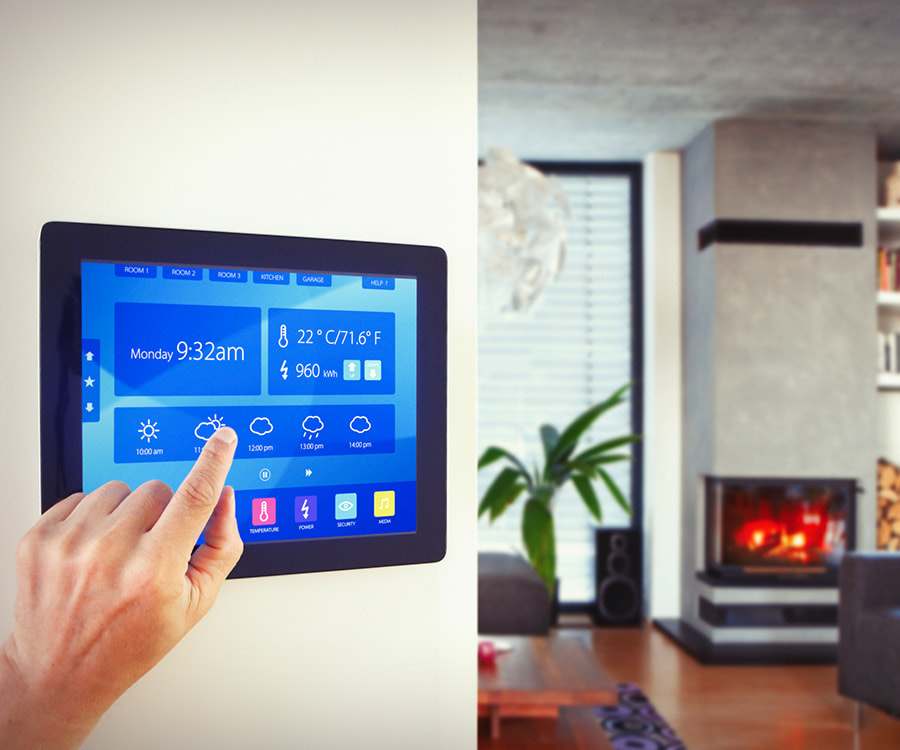
Modern home appliances increasingly use capacitive touch control panels instead of mechanical buttons, and the display glass must be electrically compatible with the capacitive sensor technology beneath it.
- Capacitive touch requires glass thickness below approximately 5–6 mm — capacitive touch panels work by detecting the change in a sensor's electric field caused by a finger approaching the glass surface. As glass thickness increases, the sensitivity of the capacitive sensor decreases because the finger is farther from the sensor electrode. For reliable capacitive touch response with bare finger operation, glass thickness should typically be 3 mm or less for standard capacitive sensor designs. Some high-sensitivity sensor ICs can work through glass up to 5–6 mm thick, but this requires verification with the specific sensor IC at the design stage.
- Uniform thickness is critical for touch accuracy — thickness variation across a capacitive touch panel changes the effective dielectric spacing and produces variation in touch sensitivity across the panel surface, causing some areas to respond with a light touch while others require firm pressure. Glass thickness variation across the panel should be controlled to ±0.1 mm or better for consistent touch performance.
- Conductive coatings or ITO layers — some touch panel designs use an indium tin oxide (ITO) conductive layer deposited on the glass surface as part of the touch sensor stack. If the appliance design includes an ITO layer on the glass, the glass must be specified as a substrate with sufficient surface smoothness (typically Ra < 0.5 nm) to allow uniform ITO deposition without voids or pinholes.
Appliance-Specific Glass Selection Summary
| Appliance / Component | Glass Type | Thickness | Surface Treatment | Key Requirement |
|---|---|---|---|---|
| Induction / radiant cooktop | Ceramic glass | 4 mm | Ceramic ink printing; AG option | Zero thermal expansion; 700°C+ resistance |
| Oven door inner panel | Borosilicate tempered | 4–6 mm | Heat-stable ceramic ink edges | Thermal shock resistance; 450°C+ service |
| Oven door outer panel | Tempered soda-lime | 4–6 mm | Ceramic ink; AR or AG coating | Impact resistance; view-through clarity |
| Microwave display panel | Tempered or chemically strengthened | 2–4 mm | AR + AF coating; touch-compatible | Touch sensor compatibility; display clarity |
| Refrigerator display window | Tempered soda-lime or chemically strengthened | 2–4 mm | AR + AF coating; touch-compatible | Low-temp stability; condensation resistance |
| Washing machine porthole | Tempered soda-lime | 5–8 mm | Polished edge; no coating needed | Impact resistance; pressure differential |
| Control panel cover (touch) | Chemically strengthened | 0.5–3 mm | AR + AF + printed graphics | Scratch resistance; touch sensor coupling |
Dimensional Accuracy and Edge Quality Requirements
The dimensional accuracy and edge finish of appliance display glass are assembly-critical parameters that determine whether the glass integrates correctly with seals, frames, and sensor modules, and whether it survives handling and installation without edge chipping.
- Dimensional tolerance — for press-fit or gasketed glass assemblies, length and width dimensions should be held to ±0.3–0.5 mm. For glass panels that must align with printed graphics or touch sensor electrode grids beneath them, tighter tolerances of ±0.1–0.2 mm may be required to prevent visible misregistration between the glass graphics and the underlying display elements.
- Edge finish — all cut glass edges should be ground and polished (C-chamfer or full-radius edge) to remove the micro-cracks left by cutting that act as stress concentrators and initiation sites for fracture under thermal or mechanical loading. Raw-cut or arrised edges are not acceptable for thermal cycling applications or for glass held in rubber seals that apply edge pressure. The IEC 60335 appliance standard effectively requires polished edges on all safety-critical glass components.
- Hole and notch tolerances — mounting holes and access notches cut into the glass before tempering should be held to ±0.5 mm and must have fully ground interior edges. The distance from any hole or notch to the nearest glass edge should be at least twice the glass thickness to prevent edge-to-hole fracture under mechanical load — a standard design rule for tempered glass components in appliance applications.