 English
 中文简体
中文简体 Español
Opto-electronics glass is a category of precision-engineered optical glass specifically formulated and manufactured to interact controllably with light in electronic systems. It serves as the optical interface material in devices that either emit, detect, transmit, modulate, or convert light into electrical signals — or vice versa. Unlike standard flat glass or borosilicate glass, opto-electronics glass is engineered to precise specifications for refractive index, transmission spectrum, surface flatness, internal homogeneity, and birefringence, enabling it to function as an active or passive optical component within devices such as photodetectors, laser diodes, LEDs, solar cells, optical sensors, imaging systems, and fiber optic components. The defining characteristic is that the glass itself must perform a defined optical function with quantified precision, not merely serve as a transparent window or structural enclosure.
Content
- 1 Core Optical Properties That Define Opto-Electronics Glass
- 2 Main Types of Opto-Electronics Glass and Their Compositions
- 3 How Opto-Electronics Glass Is Used in Key Device Categories
- 4 Manufacturing Processes That Determine Glass Optical Quality
- 5 Opto-Electronics Glass vs Standard Glass: Key Differences
Core Optical Properties That Define Opto-Electronics Glass
The properties that distinguish opto-electronics glass from standard glass are tightly controlled during manufacturing and verified by measurement before use. These properties determine suitability for each application.
Refractive Index and Dispersion
The refractive index (n) determines how much the glass bends light as it enters and exits the material — the fundamental property that governs focusing, collimation, and beam shaping. Opto-electronics glass is formulated to achieve refractive indices ranging from n = 1.45 (low-index silica glasses) to n = 2.0 and above (high-index chalcogenide and heavy flint glasses), with consistency of ±0.0001 or better across the production batch. The Abbe number (Vd) — which describes chromatic dispersion, or how much the refractive index varies with wavelength — is controlled to values from Vd = 20 (high dispersion flint glass) to Vd = 80+ (low dispersion crown glass), depending on whether the application requires achromatic correction or wavelength-selective behavior.
Transmission Spectrum
Different opto-electronic applications operate at different wavelengths, and the glass must be transparent — with internal transmission above 90–99% for the application wavelength — while potentially blocking unwanted wavelengths. Standard optical glass transmits well from approximately 350 nm (near-UV) to 2,500 nm (mid-infrared). Specialized glasses extend this range: UV-transmitting fused silica passes wavelengths down to 150 nm, while chalcogenide glasses transmit in the mid- and far-infrared from 1 µm to 12 µm or beyond for thermal imaging and infrared sensor applications.
Surface Flatness and Surface Quality
Surface flatness — measured in fractions of a wavelength of light — and surface quality (the absence of scratches, digs, and subsurface damage) directly affect optical performance. Opto-electronics glass is polished to flatness specifications of λ/4 to λ/20 (where λ = 633 nm), corresponding to surface deviations of 158 nm to 32 nm from a perfect plane. Surface quality is specified using scratch-dig notation (e.g., 60-40, 20-10, 10-5), where lower numbers indicate fewer and smaller surface defects.
Internal Homogeneity and Bubble/Inclusion Content
Variations in refractive index across the volume of the glass (inhomogeneity) cause wavefront distortion that degrades optical performance. Premium opto-electronics glass achieves refractive index homogeneity of ±1 × 10⁻⁶ or better across the aperture. Bubbles and inclusions (solid particles trapped in the glass during melting) are quantified by total cross-sectional area per 100 cm³ of glass volume and must be below the limits specified by international standards such as ISO 10110 or SCHOTT glass catalog grades.
Main Types of Opto-Electronics Glass and Their Compositions
Opto-electronics glass encompasses several distinct material families, each suited to different wavelength ranges and performance requirements.
| Glass Type | Base Composition | Transmission Range | Refractive Index Range | Key Application |
|---|---|---|---|---|
| Fused silica (synthetic) | Pure SiO₂ | 150 nm – 3.5 µm | n ≈ 1.46 | UV lasers, deep-UV lithography, fiber optics |
| Crown glass (BK7 type) | SiO₂–B₂O₃–K₂O | 350 nm – 2.5 µm | n ≈ 1.52 | General optics, lenses, windows, beam splitters |
| Flint glass | SiO₂–PbO or SiO₂–TiO₂–BaO | 380 nm – 2.2 µm | n = 1.60–1.90 | High-index optics, achromatic doublets, prisms |
| Chalcogenide glass | As–S, Ge–As–Se, Ge–Sb–Te | 1 µm – 12+ µm (infrared) | n = 2.4–3.5 | Thermal imaging, infrared sensors, night vision |
| Fluoride glass (ZBLAN) | ZrF₄–BaF₂–LaF₃–AlF₃–NaF | 300 nm – 8 µm | n ≈ 1.50 | Mid-IR fiber optics, medical laser delivery |
| Phosphate glass | P₂O₅-based with rare earth dopants | 300 nm – 3 µm | n = 1.48–1.56 | Fiber amplifiers (Er-doped), solid-state lasers |
How Opto-Electronics Glass Is Used in Key Device Categories
Photodetectors and Optical Sensors
In photodetectors — devices that convert light intensity into electrical current — opto-electronics glass serves as the protective window and optical filter in front of the semiconductor sensing element. The glass must transmit the target wavelength with minimal reflection and absorption loss while blocking wavelengths that would cause false signals or damage the detector. Anti-reflection coatings applied to both surfaces of the window glass reduce reflection losses from approximately 4% per surface (uncoated) to less than 0.1% per surface, maximizing the fraction of incident light that reaches the detector.
Laser and LED Components
Laser diode packages and high-power LED modules use opto-electronics glass as output windows, beam-shaping lenses, and collimating elements. The glass must withstand the high photon flux density — potentially megawatts per cm² in pulsed laser applications — without suffering laser-induced damage (LID), thermal fracture, or photodarkening. Fused silica and selected optical crown glasses are preferred for high-power laser applications due to their high laser damage threshold and low absorption at laser wavelengths.
Optical Fiber and Waveguide Components
Optical fiber — the primary transmission medium for telecommunications and data center interconnects — is itself a specialized form of opto-electronics glass: a precisely drawn silica fiber with a core refractive index slightly higher than the cladding, guiding light by total internal reflection over distances of hundreds of kilometers with losses as low as 0.15 dB/km at 1,550 nm wavelength. The demanding purity requirements for telecommunications fiber — hydroxyl (OH) ion content below 1 part per billion in low-water-peak fiber grades — illustrate the precision to which opto-electronics glass is engineered.
Solar Cell Cover Glass and Concentrating Optics
Photovoltaic solar cells use opto-electronics glass as both a protective encapsulant cover and, in concentrating photovoltaic (CPV) systems, as precision optical concentrators that focus sunlight onto small, high-efficiency multi-junction cells. Solar cover glass must combine high solar transmittance (above 91–92% across the 300–1,200 nm solar spectrum), low iron content to minimize absorption, and anti-reflection texturing or coating to reduce surface reflection — while maintaining these optical properties over a 25–30 year outdoor service life.
Display and Imaging Systems
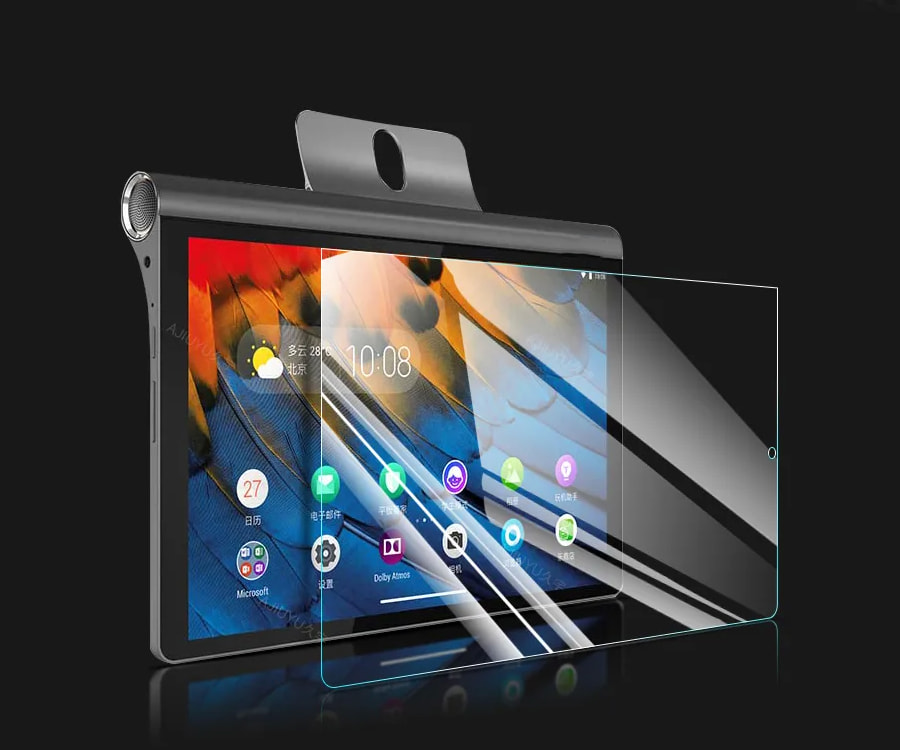
The cover glass and optical stack components of smartphone displays, camera modules, flat panel displays, and projection systems all fall within opto-electronics glass. Camera lens elements use precision-molded optical glass with tightly controlled refractive index and dispersion to achieve the required image resolution, chromatic correction, and low-light sensitivity. Smartphone camera modules now routinely include 5–8 individual glass lens elements per optical system, each molded or ground to sub-micron accuracy.
Manufacturing Processes That Determine Glass Optical Quality
The optical quality of opto-electronics glass is determined primarily during the melting and forming stages of manufacture, with subsequent cold-working processes refining surface properties but unable to correct fundamental bulk defects.
- Precision melting and homogenization — raw material batch purity and melting temperature control are critical. Even trace levels of iron (Fe²⁺/Fe³⁺) at the parts-per-million level introduce absorption bands in the visible and near-infrared, reducing transmission. Platinum-lined melting vessels are used for premium optical glasses to prevent contamination from refractory crucible materials.
- Controlled annealing — slow, precisely controlled cooling (annealing) after forming relieves internal stresses that would otherwise cause birefringence — a splitting of polarization states that degrades the coherence of laser beams and reduces the accuracy of polarimetric sensors. Annealing rates for premium optical glass are typically 1–5°C per hour through the glass transition temperature range.
- Precision grinding and polishing — optical surfaces are ground progressively with finer abrasives, then polished to the required surface roughness and flatness using pitch or polyurethane polishing tools with controlled pressure and relative motion. Surface roughness for high-quality optical surfaces is typically Ra < 1 nm — smoothness at the atomic scale.
- Anti-reflection and functional coating deposition — physical vapor deposition (PVD) and ion beam sputtering are used to apply single-layer or multi-layer thin-film coatings that modify the surface reflectance, add wavelength-selective filtering, or provide environmental protection. A standard broadband anti-reflection coating on opto-electronics glass consists of 4–8 alternating high- and low-index layers with total thickness below 1 µm.
Opto-Electronics Glass vs Standard Glass: Key Differences
| Property | Opto-Electronics Glass | Standard Float Glass |
|---|---|---|
| Refractive index control | ±0.0001 or better per batch | Not controlled to precision |
| Internal transmission | >99% per cm at design wavelength | 85–90% (iron absorption limits) |
| Surface flatness | λ/4 to λ/20 (polished) | Several wavelengths — not optically flat |
| Homogeneity | Δn ≤ ±1 × 10⁻⁶ across aperture | Significant index variation present |
| Birefringence | <2–5 nm/cm (annealed) | High — residual thermal stress present |
| Bubble and inclusion content | Strictly specified per ISO 10110 | Not specified |
| Available wavelength range | 150 nm to 12+ µm (grade dependent) | ~380 nm – 2.5 µm (visible to near-IR only) |
| Cost | High — precision manufacturing required | Low — commodity manufacturing |