 English
 中文简体
中文简体 Español
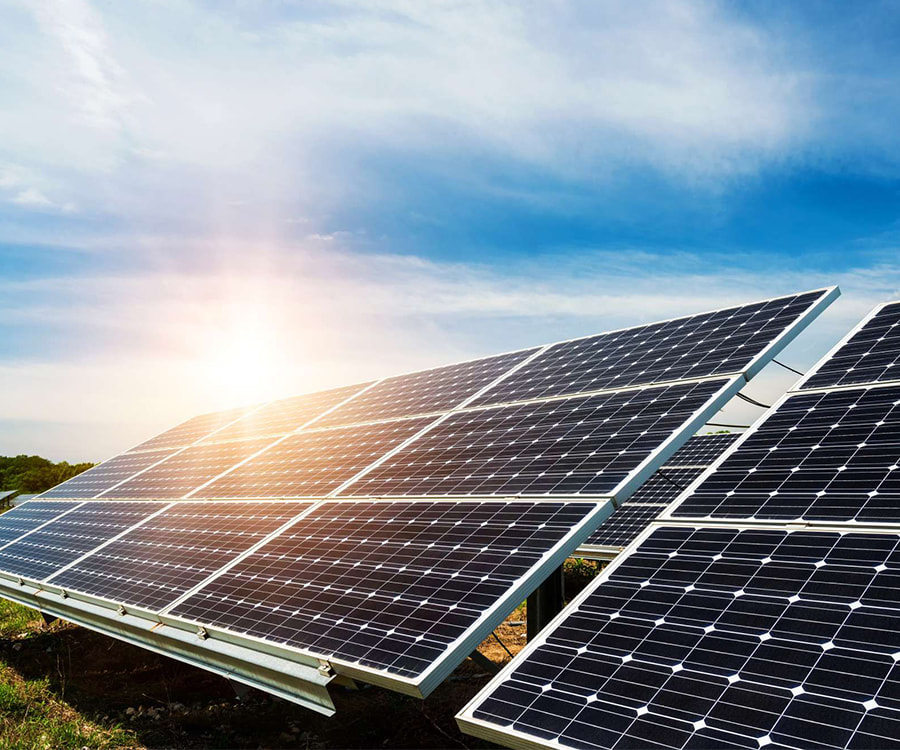
With the surge in global demand for sustainable buildings and green energy, Solar glass is no longer just a concept, but a key technology reshaping urban skylines. However, this innovative building material, integrating photovoltaic power generation, has long faced a core technological challenge: how to maximize power generation efficiency while ensuring sufficient light transmittance (meeting the building's lighting and aesthetic needs)?
Content
Technical Challenge: The "Golden Ratio" Between Efficiency and Transparency
Traditional crystalline silicon photovoltaic panels prioritize maximum efficiency and are therefore completely opaque. When we embed photovoltaic cells into building facade glass, a problem arises: high efficiency requires dense cell coverage, which sacrifices the glass's transparency; conversely, pursuing transparency (high light transmittance) necessitates reducing the number of cells or using translucent materials, thus reducing power generation performance.
Our Solar glass solutions cleverly achieve this "golden ratio" through the following key technologies:
1. Innovative Cell Layout and Spacing Optimization
Thin-film photovoltaic technology application: Utilizing thin-film photovoltaic technologies such as amorphous silicon or perovskite, the cell layer can be made extremely thin, achieving higher uniformity and aesthetics.
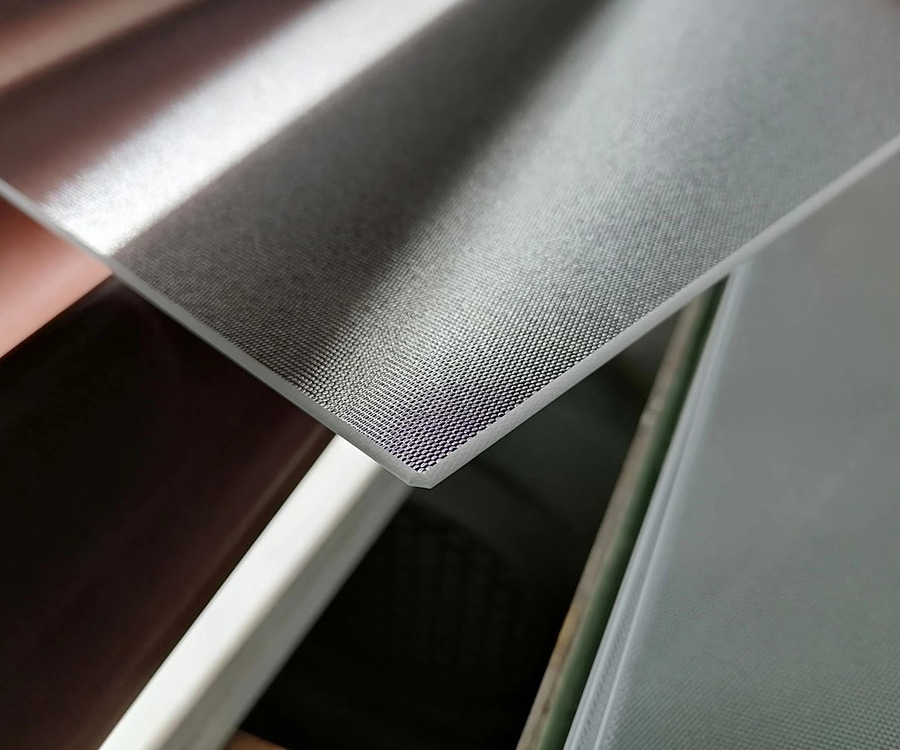
Dot matrix or stripe design: Through precise laser etching processes, regular transparent photovoltaic and power generation areas are formed on the glass. We can customize different dot matrix densities and layouts according to the building's usage requirements (such as facades, skylights, or railings), flexibly adjusting the light transmittance (from 10% to over 50%) and the corresponding power generation efficiency.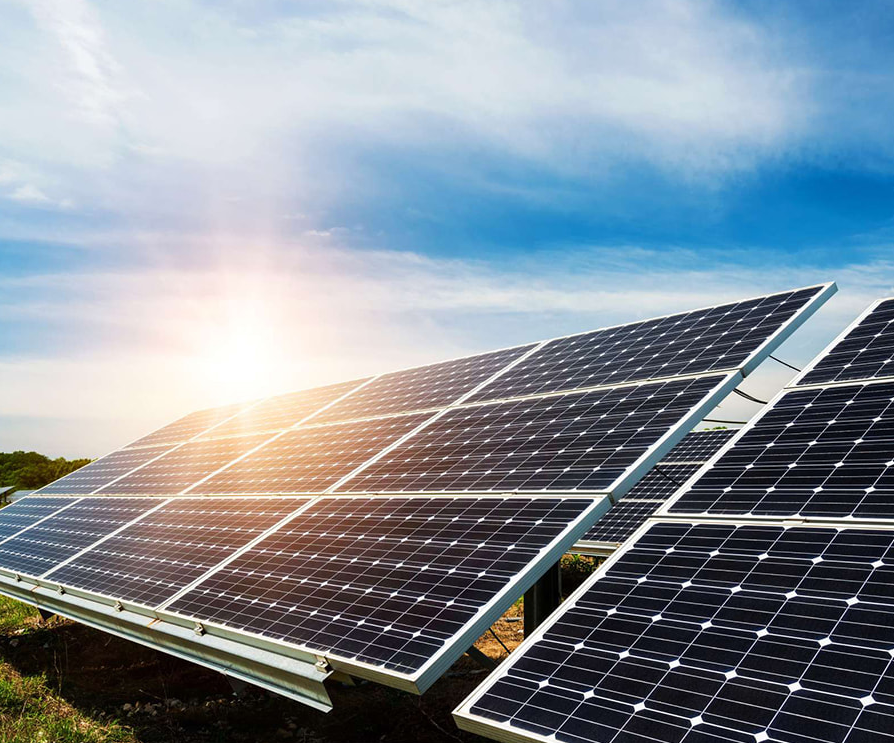
2. Core Material Selection: Ultra-clear low-iron glass
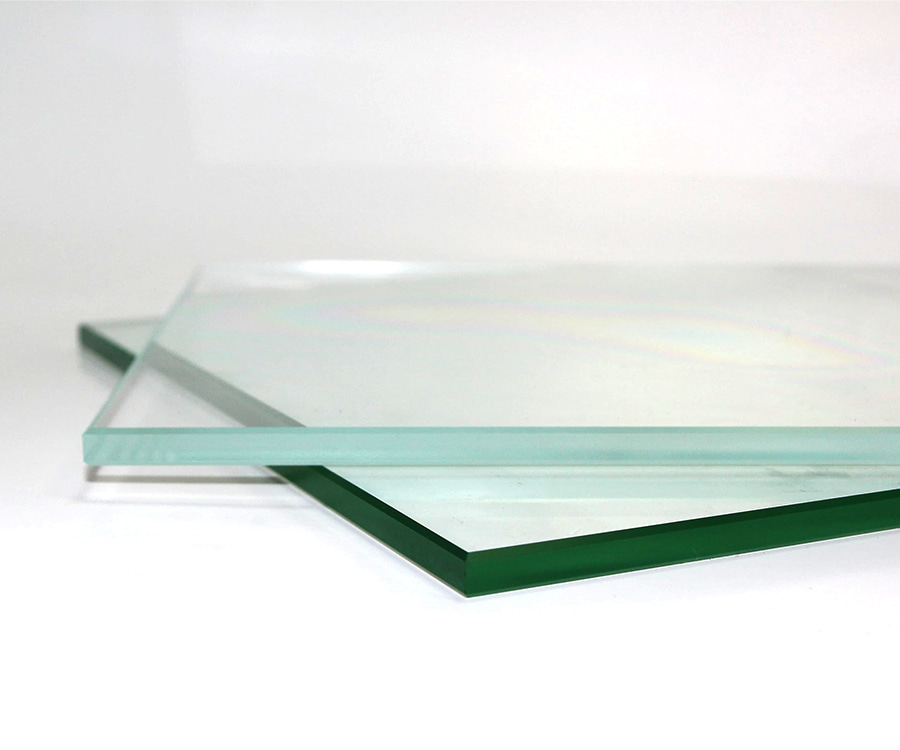
The Solar glass uses ultra-clear low-iron glass as the substrate. This glass minimizes the absorption of sunlight by iron ions, ensuring that more photons can penetrate the glass and reach the photovoltaic cells, thereby improving light utilization and final power generation efficiency from the source.
BIPV: A Perfect Integration of Aesthetics and Functionality
The true value of solar glass lies in its BIPV (Building Integrated Photovoltaics) application. It's not just a power generation product, but also a high-standard building material that meets multiple requirements including load-bearing capacity, thermal insulation, sound insulation, and safety.
Building Curtain Wall Application:
Technical Advantages: Highly customizable potential and flexible adjustment of light transmittance.
Main Benefits: Can replace traditional curtain wall materials, effectively reducing the overall building's energy consumption.
Glass Roof/Skylight Application:
Technical Advantages: Balances natural lighting needs with power generation, while providing effective shading and insulation.
Main Benefits: Increases usable power generation area and provides potential passive income for owners through electricity generation.
Photovoltaic Railing/Shading System Application:
Technical Advantages: Structurally safe and reliable, achieving aesthetically pleasing concealed power generation.
Main Benefits: Fully utilizes every inch of sunlight-receiving space in the building for energy production.
Future Trend and Production Reliability
With countries tightening carbon emission targets and promoting the concept of "zero-energy buildings," solar glass is evolving from an "optional" to a "necessity."
We understand that the market needs solar glass products with high reliability and long lifespan. Therefore, we strictly adhere to IEC 61215 (photovoltaic module performance) and building safety standards in our production. Simultaneously, we continuously invest in research and development to address potential quality issues such as delamination and PID (potential-induced degradation) during long-term operation, ensuring that the power generation efficiency of our products remains stable throughout their design lifespan.
Solar glass that balances power generation efficiency and light transmittance is an inevitable trend in the future development of green buildings. It is not only key to achieving building energy self-sufficiency but also a powerful tool for enhancing urban aesthetics and sustainable development capabilities.